Ukraine's drone empire ran on Chinese parts. Beijing tightened the screws. Kyiv had two years to fix it.
By mid-2024, 89 percent of Ukrainian UAS imports by value came from China. Beijing started restricting in December 2024.
By mid-2024, 89 percent of Ukrainian UAS imports by value came from China. Beijing started restricting shipments in December 2024. The Ukrainian localisation effort that followed is the largest single industrial mobilisation of the war, and it is not yet complete.
The Ukrainian drone industry that emerged during the post-2022 war has been the most consequential industrial achievement of the 21st-century European battlefield. Ukrainian production reached approximately 2.2 million FPV drones in 2024 and is on track to exceed 4 million in 2025; the country has more than 200 distinct UAV manufacturers, a domestic engineering workforce of approximately 50,000 people focused on UAS production, and a tactical method, pioneered by units such as the 414th Strike Drone Brigade and codified by the General Staff, that has made drone strikes the largest single source of Russian casualties in the war.[2][3]
Until very recently, that industry ran almost entirely on Chinese components. By the first half of 2024, a study by the Snake Island Institute, reported by FDD, found that 89 percent of Ukrainian UAS imports by value came from China, a slight decline from 97 percent during the first year of the war. Nearly 97 percent of Ukrainian drone producers identified China as their primary component supplier. The motors, the electronic speed controllers (ESCs), the lithium-ion battery cells, the camera modules, the GPS receivers, the carbon-fibre frames, the rare-earth magnets, almost every component category in the Ukrainian drone supply chain originated in or transited through China.[5][11]
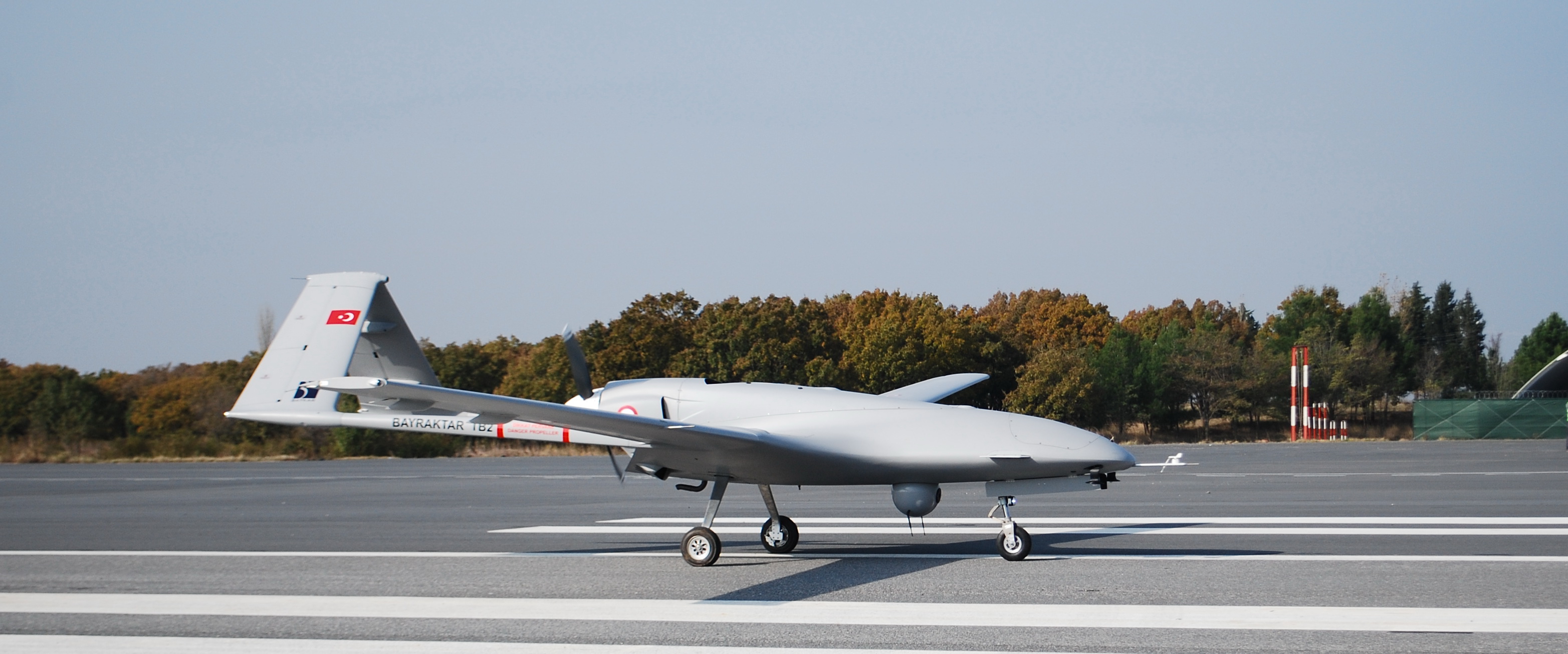
This was sustainable as long as Beijing was willing to maintain the supply. From the spring of 2022 through late 2024, Beijing tolerated the flow, through formal commercial channels, through transhipment via Kazakhstan, Belarus (until 2023), Turkey, and the UAE, and through Hong Kong-based intermediaries. The Chinese government's calculation, by every observable indicator, was that the Ukrainian drone market was commercially attractive, that constraining the supply would have produced unwanted U.S. and EU pressure on China, and that the political optics of being seen as enabling Russian battlefield casualties were manageable as long as the supply was nominally commercial and not visibly state-directed.[5]
The calculation changed in December 2024. The Chinese Ministry of Commerce announced that month a sweeping new export-control regime for dual-use UAS components, requiring case-by-case licensing for shipments destined for Ukraine, the United States, and major European customers. The stated justification was the protection of dual-use technology; the operational consequence was an immediate slowdown in Chinese component shipments to Ukrainian buyers, with downstream effects across the Ukrainian drone industry by the end of January 2025. Ukrainian producers reported shortages of brushless motors, ESCs, flight controllers, and most acutely of high-grade battery cells.[5]
The Ukrainian response, across 2025 and into 2026, has been the largest single industrial mobilisation Ukraine has undertaken since the war began.
What Beijing did
The December 2024 export-control measures were not a blanket ban. Beijing did not formally prohibit shipments to Ukraine; it imposed a licensing regime under which each shipment requires individual ministry approval. The practical effect, however, has been a significant reduction in shipment volumes, longer delivery times, and a steady migration of supply to less-controlled transhipment routes through the UAE and Turkey.[5]
The reasons for the Chinese shift are not fully disclosed in the public record, but the most coherent reading combines three factors. First, the Trump administration's January 2025 reentry and its subsequent diplomatic pressure on China, including reported threats of secondary sanctions on Chinese exporters identified as supplying Russia or Russia-affiliated entities, created direct U.S. leverage that Beijing was not prepared to absorb cost-free. Second, China's broader 2024-25 industrial-policy emphasis on critical-technology controls, partly motivated by its rare-earth policy contests with the U.S., made tighter UAS exports a natural extension of that posture. Third, the Russian-Chinese strategic relationship, after deepening steadily across 2022-24, had by late 2024 developed tensions over Chinese commercial penetration of Russian-aligned spheres and over a Russian dependence on Chinese hardware that Beijing regarded as undermining Russian autonomy. The December 2024 measures imposed equal restrictions on supply to Ukraine and to U.S. and European customers; they did not directly favour Russia, but neither were they unfavourable to Russian commercial-military interests.[5][6]
The CSIS analysis of the December 2024 measures characterised them as a Chinese signal that Beijing would not permit either side of the Ukrainian war to develop an unconstrained drone-manufacturing capability dependent on Chinese components without Chinese leverage over the resulting industrial outcome. The signal was directed principally at Ukraine, and was substantially effective in producing the Ukrainian localisation push that followed.[6]
Ukraine's localisation: what got built
The Ukrainian Strategic Industries Ministry, working with the Defence Forces' procurement office and with the Brave1 innovation incubator, launched a coordinated industrial response in January 2025. The response was structured around what the ministry called the "five critical component categories": motors, ESCs, flight controllers, batteries, and frames. Each category was assigned to a small group of Ukrainian producers, with the ministry providing capital, equipment access (often through European tooling-import lines), and guaranteed offtake.[2][8]
By the close of 2025, the share of Chinese parts in the average Ukrainian-produced FPV drone had fallen from approximately 89 percent to approximately 38 percent. The single largest Ukrainian motor producer, MotorG, was approaching 100,000 motors per month by late 2025, an output sufficient to displace the bulk of Chinese-sourced motors in the Ukrainian production base.[2][8] F-Drones, which began its operations in 2023 with an entirely Chinese supply chain, was by 2025 manufacturing flight controllers, electronic speed controllers, radio modems, and video transmission systems domestically. Carbon-fibre frame production, long regarded as the most plausibly localised component because the underlying carbon fibre can be sourced from European mills, had reached substantially full local production by the close of 2025.[2]
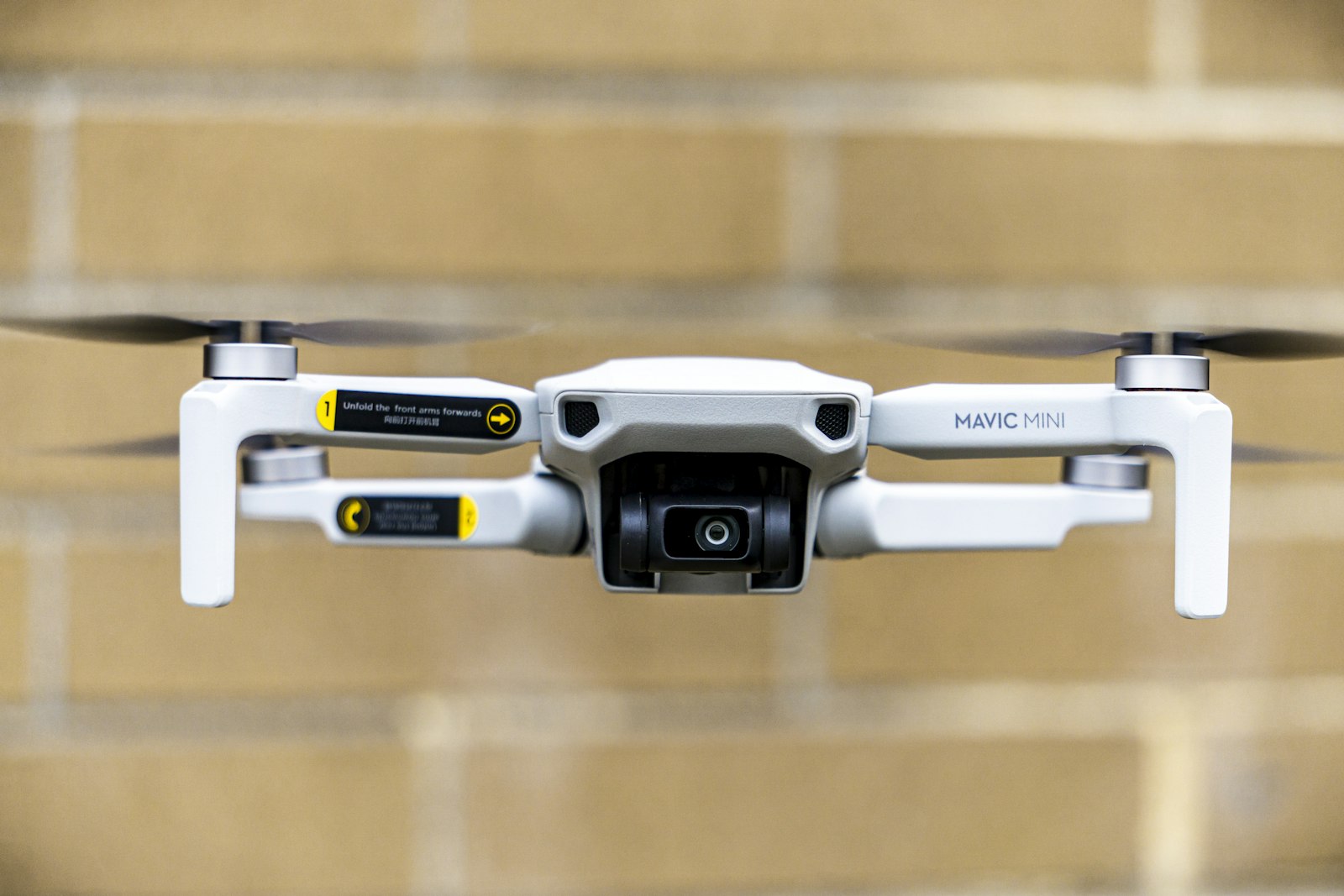
The most difficult category has been lithium-ion battery cells. China's dominance of high-end lithium-cobalt cathode production and of the broader battery-precursor supply chain makes the cell-level localisation effort genuinely hard. Ukrainian-produced battery packs in 2025 typically integrated locally-sourced battery management systems and casings around Chinese-imported or European-sourced cells, while cell-level production capacity remained marginal. The DroneXL "China-free drone milestone" reporting in March 2026 described a specific, small-batch demonstration that a fully China-free Ukrainian FPV drone was technically possible, but the same report cautioned that mass production at that standard remained years away.[1]
What the localisation has and has not achieved
The Ukrainian drone industry as of mid-2026 is, in aggregate, less dependent on Chinese components than it was in mid-2024. The 38-percent figure, the share of Chinese parts in the average drone, represents a substantial reduction from 89 percent, but the residual dependence is concentrated in the highest-value components (batteries, certain electronic components) and in the categories that are most sensitive to short-term supply disruption.
The localisation has had three significant operational effects. First, the cost per FPV drone has risen: Ukrainian-produced motors and ESCs are more expensive than their Chinese-imported equivalents, and the premium has translated into a budget squeeze on the broader UAV procurement programme. Second, production volumes have continued to scale, but at a slower rate than the pre-2025 trajectory would have predicted; the share of total Ukrainian UAV requirements met by domestic production has improved, but the absolute volume of drones available to front-line units is below the level that uninterrupted Chinese supply would have permitted. Third, the localisation has substantially expanded Ukraine's medium-term industrial sovereignty in a strategic-component category, in a way that will outlast the war.[2]
The localisation has not achieved full independence. The 38 percent residual Chinese component share is real and operationally consequential, particularly for batteries, where the alternative supply chains (Korean, Japanese, U.S.) cannot fully substitute for Chinese cells at the price points that Ukrainian mass production requires. The CSIS analysis documents the texture of the residual dependence rather than a single capacity number: with the December 2024 controls in force, component prices have tripled and Ukrainian output has fallen well below its potential, leaving the highest-value categories exposed to any further tightening.[6]
What this implies for the war and beyond
Three implications stand out.
First, the Ukrainian localisation effort demonstrates that a determined industrial mobilisation against a component-supply-chain choke point can substantially close the dependency gap within 12-18 months. The Ukrainian case is, in this respect, the clearest available case study of how the U.S. and EU could approach their own broader China-component dependencies. Decoupling on this model is not fast, but with sufficient state coordination, capital, and political urgency, a meaningful localisation is feasible. The Ukrainian case has been studied closely by U.S. Department of Defense procurement officials and by EU Commission industrial-policy staff as a model.[6]
Second, the localisation has not eliminated Ukraine's strategic vulnerability to Chinese decision-making. Beijing retains the ability, through further tightening of the export-control regime, through actions against specific Ukrainian producers, or through pressure on third-country transhipment hubs, to substantially constrain Ukrainian drone production, and that dependence compresses Ukrainian leverage in any settlement negotiation with both Russia and the United States, a point the CSIS analysis makes directly.[6] Beijing has continued to use the instrument: in April 2026 its Commerce Ministry banned dual-use exports to seven European defence manufacturers, among them Hensoldt and FN Herstal, over arms sales to Taiwan, a demonstration that the export-control lever extends to any defence-industrial customer Beijing chooses to squeeze.[12]
Third, the Ukrainian-Chinese supply-chain story is now a regional case study for the broader question of how middle powers in the U.S.-China competition will manage component-supply dependencies. The Ukrainian experience suggests that the standard analytic assumption that decoupling is impractical, and supply-chain independence a fantasy, substantially under-weights the rate at which a national industrial mobilisation can transform component dependencies under sufficient urgency. Ukrainian state coordination has done in 18 months what the U.S. and EU industrial-policy literatures had previously assumed would take 5-10 years.
Ukraine has not solved the Chinese-dependency problem. It has, however, reduced the dependency at a rate that no pre-2025 analytic framework anticipated, and the Western industrial-policy debate has not yet absorbed what that rate implies for its own response to Chinese component dominance.
Sources
- DroneXL, "Ukraine Hits China-Free Drone Milestone, But Mass Production At That Standard Is Years Away," March 11, 2026,, source
- Kyiv Independent, "'Little by little away from China', Inside Ukraine's new mass-production of drone parts," 2025-26,, source
- Olena Kryzhanivska, "FPV Drone Localization in Ukraine," Ukraine's Arms Monitor Substack, 2025-26,, source
- Kyiv Post, "Ukraine Cuts Reliance on Chinese Drone Components," 2025,, source
- Foundation for Defense of Democracies, "China is a Key Factor in Ukraine's Surging Drone Industry, Beijing's New Export Controls May Ground It," October 2025,, source
- Center for Strategic and International Studies, "Why China's UAV Supply Chain Restrictions Weaken Ukraine's Negotiating Power," 2025,, source
- DRONELIFE, "Ukraine's Drone Industry Breaks Dependence on Chinese Parts," March 2026,, source
- Brave1 / Ukrainian Strategic Industries Ministry, public industrial-policy reporting, 2025-26,, source
- Jack Watling and Nick Reynolds, Tactical Lessons from Ukraine: Russian Drone Warfare, RUSI, 2024-25,, source
- Conflict Armament Research, OSINT teardowns of Ukrainian and Russian UAS components, ongoing 2024-26,, source
- Snake Island Institute, "Building the Arsenal: Securing the Components to Sustain Combat Power," October 10, 2025,, source
- Reuters, "China bans dual-use item exports to seven European entities over Taiwan arms sales," April 24, 2026,, source