Israel has a name for the wars it cannot win: mowing the grass. The question is whether Iran is one of them.
Israel has a doctrine for enemies it cannot defeat: cut them back every few years and call it deterrence. The interim deal being signed this week leaves Iran's missiles and nuclear program standing, and analysts are split over whether a strategy built for Gaza can work against a state that can darken the Gulf.
The doctrine is real and decades old: degrade a hostile force every few years, restore deterrence, and accept that the threat will regrow. It was built for Gaza. The interim memorandum being signed in Geneva this week leaves Iran's missiles and its nuclear program standing, and analysts are divided over whether the strategy can work against a state of ninety million that can close the Strait of Hormuz. A history of the strategy, the case that Iran is the wrong target for it, and an assessment of what a second strike would look like if one comes.

On June 19, in Geneva, the United States and Iran are due to sign a memorandum of understanding roughly a page and a half long. It ends a war that ran some hundred and ten days, reopens the Strait of Hormuz to toll-free traffic, lifts the American naval blockade of Iran's ports, releases frozen Iranian money during a sixty-day window, and starts a clock on nuclear talks that have not yet begun.[1][2] Trump and Vice President J.D. Vance put their names to it by video link on June 15, from the margins of a G7 summit, four days before the formal ceremony.[3]
Read the document for what it leaves out and a different war comes into view. Iran's ballistic-missile program is not in it. Iran's support for Hezbollah and the other forces it arms is not in it. The fate of more than four hundred kilograms of sixty-percent enriched uranium, last verified by international inspectors and then lost to them when the bombing began, is pushed to a second agreement that may never be written.[1][4] The Iranian draft that circulated in Tehran's press described the missiles and the partners as "removed from the negotiating agenda" altogether.[2] What the war set out to destroy, the deal that ends it agrees to leave standing.
That is not a failure of the negotiators. It is the predictable shape of a particular kind of war, one Israel has been fighting, and naming, for more than a decade. The Israelis call it mowing the grass — "mowing the lawn," in the looser American phrase that crept into the commentary on it.
I. What "mowing the grass" is
A doctrine with no endgame
The phrase entered the strategic vocabulary in 2014, in a paper by Efraim Inbar and Eitan Shamir, two scholars then at the Begin-Sadat Center at Bar-Ilan University, titled "'Mowing the Grass': Israel's Strategy for Protracted Intractable Conflict."[5] Their argument was bleak and, on its own terms, candid. Israel faces enemies it cannot eliminate and cannot make peace with. Against such an enemy, force is not a road to victory. It is maintenance. The use of force, they wrote, "is not intended to attain impossible political goals, but [is] a strategy of attrition designed primarily to debilitate the enemy capabilities."[5] Every so often the grass is cut. The capability regrows. The decision to cut it comes round again.
The doctrine accepts what most strategy refuses to: that the war does not end. There is no surrender to extract, no government to replace with a friendlier one, no treaty waiting at the bottom of enough firepower. There is only a hostile capability that regenerates and a periodic decision to cut it down, to buy a few years of relative quiet and to remind the enemy what another round would cost. The Begin-Sadat summary put it plainly. Israel "simply needs to mow the grass once in a while," acting "after showing much restraint," in hope of "a temporary deterrent effect."[6] The strategy "reflects the assumption," that summary conceded, that no political solution "is likely to be achieved."[6]
The obvious objection is that a strategy with no endgame is not a strategy but a treadmill, and the obvious question is why Israel has stayed on it for fifteen years. The answer is that mowing does things that resolution cannot. A negotiated settlement asks an Israeli governing coalition to absorb the political risk of concessions whose payoff is uncertain and slow; a limited operation delivers a visible result on a timescale a government can survive. Recurring operations give the military and the intelligence services a standing mandate, a budget, and live conditions in which to test platforms and rehearse the next war. And deterrence, in this reading, is a thing maintained by repetition rather than achieved once, an account the enemy is made to settle at intervals. None of this resolves anything. All of it is easier than the alternative, which is why the doctrine has outlived every prediction of its collapse. Its critics, including some inside Israel's own security establishment, argue that it is precisely this comfort that makes it a trap: a way of managing a conflict so as never to have to end it, banking tactical wins while the strategic problem compounds.[7]
The record in Gaza
Gaza is where the doctrine was forged and where its record can be read. Since the winter of 2008, Israel has mounted a sequence of major operations against Hamas and Islamic Jihad in the Strip, each ending the same way: a ceasefire brokered in Cairo, a period of rebuilding, and another operation once the rebuilding had gone far enough. Operation Cast Lead, over the turn of 2009, ran twenty-three days and killed some fourteen hundred Palestinians.[8] Pillar of Defense, in November 2012, lasted eight.[9] Protective Edge, in the summer of 2014, was the longest and worst, fifty days and well over two thousand dead.[10] Then a gap of nearly seven years, broken by the eleven days of Guardian of the Walls in May 2021, and after that the smaller punitive rounds against Islamic Jihad, Breaking Dawn in 2022 and Shield and Arrow in 2023, each a matter of days.[11][12] The intervals were not random. They tracked how fast the arsenal regrew and how much political pressure had built to act.

The cadence carries a lesson the doctrine's defenders tend to skip. Writing in 2014, the American strategist T.X. Hammes argued that mowing the grass was already failing on its own terms: each round inflicted a civilian toll that "will undoubtedly further shift international opinion against Israel," while the enemy used the interval between cuts to rearm with longer-range and more accurate weapons than it had before.[7] The mower, in other words, trains the grass. Cut an adversary back without destroying it and you teach it exactly what it needs to survive the next cut, which threshold of capability brings the strike, what dispersal and hardening lets you ride it out, what rate of rebuilding stays under the line. Each Gaza operation was also a tuition payment, and the enemy was a quick study. Hold that against Iran, which has just sat through the most detailed live demonstration of Israeli and American strike packages ever staged against it, and which has spent the months since not bargaining its missiles away but insisting they stay off the table.
II. Is mowing the likely future for Iran?
Iran fought to deter the next campaign
To understand why the deal looks the way it does, start with what Iran was trying to buy. From the first indirect talks in Muscat in early 2025 through the strikes of February 2026 and the long, broken ceasefire that followed, the Iranian position held to a single core. It would trade on its enrichment level, on inspections, on the timing of sanctions relief; it would not negotiate away the two things that make it dangerous enough to be left alone.[13] Its missiles and its regional partners were, in the language of the Tehran draft, not on the agenda.[2]
This was not stubbornness. It was the strategic logic of a country that had watched Israel mow Gaza for fifteen years and had no intention of becoming the next field. A state with a credible capacity to strike back is not a field to be mowed; it can raise the price of a cut above what the cutter is willing to pay. Iran spent the spring proving it could. When the strikes came, it answered with hundreds of ballistic missiles and thousands of drones, closed the Strait of Hormuz, and aimed its retaliation past Israel at the Gulf states that host American bases.[14] A Shahed drone reached a sovereign British air base on Cyprus.[37] None of this spared Iran a brutal tactical defeat. All of it raised the cost of finishing the job to a level no one, in the end, was willing to pay.
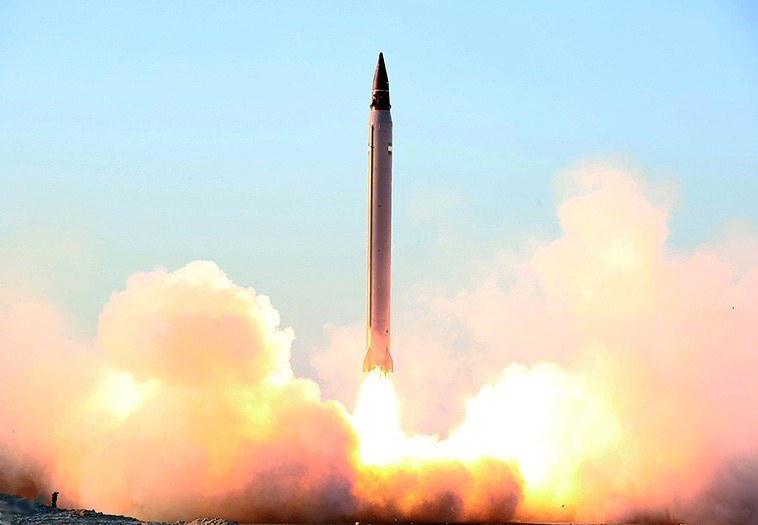

The tactical defeat was real and should not be minimized. By Israeli military accounting, figures independent analysts have not been able to confirm, the campaign destroyed roughly ninety percent of Iran's top-tier mobile air defenses, struck about sixty percent of its missile launchers, and halted production, leaving an arsenal Israel put at around forty percent of its pre-war size.[19][20] Not a single crewed Israeli aircraft was lost over Iran. Iran's Supreme Leader of nearly thirty-seven years, Ali Khamenei, was killed in the opening hours, and his son Mojtaba was named in his place within nine days.[18] On any battlefield ledger, Iran lost.
And yet the analysts whose job is to weigh these things have largely concluded that Iran achieved its strategic aim even as it lost the war. The clearest statement of the case comes from Mona Yacoubian of the Center for Strategic and International Studies, in an April 2026 essay whose title names the whole question: "Why 'Mowing the Grass' Won't Work in Iran."[16] Episodic strikes, she argued, "will reaffirm Tehran's ambitions for lasting deterrence — likely via pursuit of a nuclear weapon." Iran retains "enough drones and missiles to re-up its newfound disruption strategy if it feels significantly threatened." The model built to grind down a cornered guerrilla force runs in reverse against a state large enough to take the blow and answer it.
Pursuing a policy of episodic attacks on Iran will reaffirm Tehran’s ambitions for lasting deterrence — likely via pursuit of a nuclear weapon. — Mona Yacoubian, Center for Strategic and International Studies, April 2026
Analysts who agree on little else reached the same verdict. The day the deal was announced, the Atlantic Council assembled a panel of them. Victoria Taylor judged that the war "may have persuaded the Iranian leadership that a nuclear deterrent is the best way to safeguard its future." Danny Citrinowicz, a former Israeli intelligence officer, wrote that Iran emerges with "the regime intact, strengthened, and formally engaged by the United States." Daniel Shapiro, a former American ambassador to Israel, ran down what the memorandum does not touch: "nothing on Iran's ballistic missiles, nothing on Tehran's network of proxy forces, nothing on weakening the regime or helping the Iranian people."[17] An enemy that finishes a war with its deterrent intact, its program buried but breathing, and a great power's signature on a document naming it a negotiating partner has not been mowed. It has been fought to a draw it can afford to call a win. Iranian-facing analysis reaches the same place from the other side: the war, one regional assessment argued, "has not reduced the strategic rationale for nuclear deterrence in Iran" but strengthened it, leaving a state more militarized and more willing to take risks than the one the strikes set out to tame.[31]
There is a darker possibility the regime's own behavior raises, which is that being mowed suits it. An Iranian leadership facing a legitimacy crisis at home draws cohesion from an external assault; the war let the Revolutionary Guard frame dissent as treason, pressed rival factions into line, and handed Mojtaba Khamenei, an untested fifty-six-year-old cleric without his father's standing, the one credential that confers authority quickly, which is a war to lead. A regime that governs badly in peace and rules easily under siege has a perverse stake in the next siege. That cuts against any theory in which strikes coerce better Iranian behavior, and it sharpens the doubt about whether mowing changes anything in Tehran except the speed at which the security state consolidates.
A one-time strike, not a cycle: the Begin Doctrine
Before asking when the next cut comes, it is worth asking whether the frame survives contact with the case, because the strongest objection to this whole subject is that mowing the grass is the wrong model for what just happened. The Gaza operations were fought against a non-state actor sealed inside forty walled kilometers, with no air force, no patron willing to fight for it, no seat at any table, and no way to reach Israel except over a border Israel controls. The 2026 war was an interstate conflict that ran for nearly four months, killed a head of state, drew in American bombers and a British base, and ended with the United States and Iran signing a document as sovereign equals. Calling that a mowing is not an extension of the doctrine so much as a change of category dressed as one. "Iran is not Hamas," Yacoubian wrote, in the flattest sentence in her essay; the rest of the analysis is an argument about how much that sentence should govern.[16]
Israel has another doctrine that fits the facts better, and its history points the opposite way. After bombing Iraq's Osirak reactor in 1981, Menachem Begin announced that Israel would never allow a hostile state in the region to acquire nuclear weapons, and called the raid "anticipatory self-defense." It became known as the Begin Doctrine, and its signature is the single, decisive, preventive strike, not the recurring cut. Israel applied it again in 2007, destroying a Syrian reactor at al-Kibar in a one-night operation it did not even acknowledge for years, and which drew almost no international protest.[15] Both were nuclear strikes on states. Neither produced a mowing cycle, because in each case the program was young, above ground, and singular: one reactor, one strike, one result, and no recurrence. That is the precedent for hitting a state's nuclear project, and it is a precedent for finishing, not maintaining.
The reason 2026 did not look like Osirak is the reason it threatens to become a cycle instead. Iran's program was not one reactor but a dispersed, buried, decades-deep enterprise, and the deepest of it survived. Israel could degrade it but not end it, and an unfinished preventive strike is, by default, the first cut of a mowing campaign whether anyone intended it as one. The category problem, then, is not academic. If Iran is a Begin-Doctrine target, the right question is whether the job can be finished, and the answer shapes one kind of policy. If Iran is a mowing target, the job is by definition never finished, and the answer shapes another. The 2026 war began as the first and ended as the second, and the memorandum signed in Geneva is the ceasefire at the seam between them. The label is itself contested inside Israel, where some strategists treat "mowing the grass" less as a deliberate plan than as a phrase applied after the fact to operations never conceived as a cycle. The doctrine may describe Israeli behavior more honestly than it describes Israeli intent.
Why Iran is not Gaza
Grant that some version of periodic strikes is now on the table, and the disanalogies become the analysis. Iran is a thousand miles away, across hostile or nervous airspace. It is ninety million people and a million and a half square kilometers. It sits astride the strait through which a fifth of the world's seaborne oil moves, and it has spent two decades building the missile force and the network of partners that let it impose costs far from its own borders. A strategy of limited, deterrence-restoring strikes assumes the target cannot turn a limited strike into an unlimited crisis. Iran spent the spring proving that it can.
It has something else no mowing target ever had: great-power patrons with the capacity and the motive to rearm it. Hamas rebuilt after each cut with smuggled parts and local workshops. Iran can rebuild with Russian air-defense components and Chinese money and machine tools, and both Moscow and Beijing have reasons to keep it capable. Russia has leaned on Iranian drones for its own war; China depends on the oil that moves through Hormuz and on an Iran that ties down American attention. The pace at which they are willing to help reconstitute Iran's launchers and air defenses is the variable that decides whether the grass grows back faster than Israel can cut it, and it is the variable a Gaza analogy cannot see. The relevant model here is not Hamas but North Korea, a state that absorbed years of pressure, kept its great-power cover, and resolved the problem permanently by building the bomb, after which no one mowed it again. That is the example Iran's leadership has in front of it, and it is the example the strikes have made more, not less, persuasive.
Matthew Kroenig, writing for the same Atlantic Council panel, argued the opposite case bluntly: that the strikes worked, that "Iran's nuclear program no longer exists," and that if Tehran tries to rebuild it, "the US can simply bomb again."[17] This is the mowing doctrine stated as a virtue. On Kroenig's reading the program's survival is temporary, the deterrent is a bluff, and any reconstitution will be seen and struck, indefinitely, at a price the United States and Israel can pay longer than Iran can. The disagreement between Kroenig and Yacoubian is not about facts. It is about whether a state of ninety million can be made to live, permanently, under a strike it cannot prevent, and whether trying to make it does more to break its will or to harden its resolve to build the one weapon that ends the game.
Iran’s nuclear program no longer exists, and if Tehran tries to rebuild, the US can simply bomb again. — Matthew Kroenig, Atlantic Council, June 2026
III. What a future mowing campaign would look like
The rest of this is assessment rather than reporting, and it is built as a set of questions, because the honest output of forward analysis is a weighing and not a forecast. The 2026 war revealed enough about the limits of the first attempt to sketch the shape of a second, and the weighing runs mostly one way: a future cut would be shallower, more isolated, and gated as much by politics as by capability. The men who would order it and run it are already in place.
The principals of the next cut
Israel — the mower
- Benjamin Netanyahu — Prime Minister — In office — Pressed the war on Iran to its furthest point and rejects the idea that the deal ties Israel’s hands.
- Israel Katz — Defense Minister — In office — Says the army will hold its security zones in Lebanon, Syria and Gaza with no time limit, and answer any Iranian move with great force.
- Eyal Zamir — IDF Chief of the General Staff — In office — Ran the multi-front war and disclosed that commandos had operated covertly in the heart of Iran.
Iran — the field
- Mojtaba Khamenei — Supreme Leader — Since Mar 2026 — Confirmed nine days after his father was killed; an untested cleric whose authority rests on the Revolutionary Guard and on the war itself.
- Ahmad Vahidi — IRGC commander-in-chief — Since Mar 2026 — Leads a Guard corps that lost most of its senior command in the opening strikes and now rebuilds the missile force the deal leaves untouched.
Lebanon — the likeliest trigger
- Naim Qassem — Hezbollah Secretary-General — In post — Refuses to disarm and warns northern Israel will not be safe while Lebanese villages are struck — the open front that could pull the deal apart.
Roles as of June 2026. Portraits via Wikimedia Commons, official and Creative-Commons sources.
Different weapons
The 2026 campaign was an air war, some fifteen hundred F-35I sorties over Iran flown without loss.[32] The part of it that bit deepest into the nuclear program was not flown. The enrichment hall at Fordow, under roughly ninety meters of rock, could be reached only by the American GBU-57, carried only by the American B-2, a weapon Israel neither owns nor can deliver, and even the strikes that landed left the hall intact and the enriched uranium moved out ahead of them.[28][4][29] Where the aircraft hit a ceiling, the damage that mattered was done on the ground and in the dark, by the commandos Eyal Zamir placed "in the heart of enemy territory," by sabotage, and by an agent network inside the country.[30] The standoff missiles that opened the sky, the Air LORA and the Rocks fired from beyond Iranian airspace, did the enabling.[33]

A second campaign would inherit a worse air picture than the first one began with. Iran's top-tier defenses, heavily damaged, are rebuilding around surviving Russian components; Israel's interceptor magazines were drawn down to levels that take years to refill.[19][27]
**Would Israel's air force play a smaller part next time, leaning on standoff missiles, drones, and ground operations rather than manned flights deep into defended skies?**
- **The case for it.** Air power hit a hard ceiling on the buried sites and cannot pass it without a weapon only Washington holds; Iranian defenses are reconstituting while Israel's interceptors are not yet replaced; and the clandestine effort, not the bombers, did the decisive work against the hardened targets.
- **The case against.** Israel's stealth fleet flew with near-total impunity, which is an asset to spend rather than shelve; standoff weapons buy reach but cannot drive a warhead through ninety meters of rock; deep ground raids are extraordinarily risky and do not scale; and every other line of effort still depends on someone first owning the sky.
The weight is on the first side, but only so far. A future operation leans harder on standoff and sabotage because the deepest target is closed to it, not because the air force has lost its edge. The shift is the signature of a shallower campaign, not a stronger one.
Different targets
If the buried program cannot be finished, what is left to hit is people and economies. The war already mapped the second. Israeli strikes hit the South Pars gas field and the Asaluyeh complex that supplies most of Iran's gas and the fuel behind most of its electricity;[34] the refineries, the grid, and the export terminal at Kharg are all above ground and central to a regime that has to pay its security forces. The first target set is the new command generation of the Revolutionary Guard, the officers who replaced the ones killed in the opening hours, decapitation run a second time.
**Would a future cut give up on the centrifuges and aim at the hittable instead, the IRGC elite and the economic backbone?**
- **The case for it.** These targets are reachable with the standoff and clandestine tools Israel can field without American bombers, and several are genuinely painful, because Iran's economy runs on the energy plant the strikes can reach.
- **The case against.** Iran proved it answers an infrastructure strike in kind: when Israel hit South Pars, it struck Qatar's Ras Laffan and knocked out a sizable share of one of the world's largest gas exporters, with repairs measured in years.[34][35] An energy war is two-sided and price-shocking, running across the Gulf supply the global economy depends on and the neighbors who already refused to host the last campaign. Water and desalination are hittable for the same reason they are dangerous. And decapitation runs into what the succession already showed, that the Islamic Republic replaced a dead Supreme Leader in nine days and the Guard closed ranks under the assault rather than cracking, so killing the new command may only clear the way for a younger and more radical one.
Both sides net toward the same caution. What is easiest to hit is what Iran is best placed to answer, and what is most satisfying to kill is what the regime is best built to replace.
Different allies
The first war was a coalition operation whether Israel wanted one or not. The deepest targets needed American bombs, the logistics needed Gulf refueling and overflight, and the umbrella over Israeli cities was backstopped by American batteries. That coalition was also Iran's best weapon. Its most effective answer in 2026 was not its air defenses, which Israel shredded, but its reach into the Gulf, the missiles and drones it threw at American bases and Gulf energy to turn a bilateral strike into a regional crisis and price a great power out of the war.[14] The twenty-nine billion dollars and the forty-odd aircraft were the mechanism by which Iran made an Israeli operation into an American problem, and then an American exit.[26]
**Would a future strike be run deliberately without American bases and Gulf airspace, to deny Iran that regionalizing answer?**
- **The case for it.** A strike that stages through neither leaves Iran fewer targets for the spread-the-pain response that worked the first time; the Gulf, taught that an American base nearby is a liability, avoids the backlash; and Washington avoids authoring another costly war and keeps the strait open, which is what it wanted.
- **The case against.** Without the B-2 and the GBU-57 there is no reaching Fordow, so going alone means accepting a shallower strike that cannot touch the deepest target; without Gulf overflight the operation is longer and more exposed; Iran can hit Israel directly with the missiles it kept and through Hezbollah regardless of whose airspace was used; and a strike enabled by years of American hardware does not read as bilateral in Tehran, so the wider answer can still come, on a pretext rather than a provocation.
This is the question that most clearly nets against itself. The case for going alone is a case for a smaller war; the case against is that a smaller war cannot finish the job. Israel can have deniability or it can have Fordow. Without Washington it cannot have both.
Different tactics
The levers that need neither American ordnance nor Gulf airspace are political and clandestine rather than kinetic, and they are the ones a more isolated operation would lean on. The war already showed Israel reaching for them: the covert effort, the agent networks inside the country, and a reported plan to arm Iran's Kurdish opposition and touch off an internal rising, which collapsed amid leaks before it began.[36]
**Could subversion substitute for the firepower Israel cannot bring to bear, arming the regime's enemies and working the story against it?**
- **The case for it.** Arming Kurdish or Baluch forces and running an information campaign around the regime's corruption and repression are cheap and deniable, need no foreign bases, draw on real grievances and a genuinely unpopular leadership, and unlike a strike can run continuously, in the intervals when the aircraft are grounded.
- **The case against.** The one recent attempt failed and leaked, and American assessments judged the opposition lacked the means to sustain a rising; arming insurgents lets the Revolutionary Guard recast all dissent as foreign treason, the argument that consolidated the regime under the last assault; foreign-sourced messaging is easily branded as foreign and can rally a population around a leadership it dislikes; and the effort would now be aimed at an untested Supreme Leader who may be hardened rather than weakened by a visible foreign campaign against him.
The honest reading is the one the war already wrote. The lever exists, Israel has reached for it, and it proved leaky and low-yield. It is the kind of tool that fills the interval between cuts without ever being the cut.
When the mower comes out, and who decides
The constraints argue against any of this being imminent. Israel's interceptors need years to refill.[27] A president who spent twenty-nine billion dollars to get out of the war is not the obvious man to underwrite the sequel, and in the endgame he "shut down Israeli attacks on Hezbollah" and pressed the ceasefire through.[17] The Gulf states that refused to host the last strike have hardened toward de-escalation, with the 2023 Saudi-Iran détente strained but intact.[25][21] A strike that needs American bombs and Gulf airspace runs into an American brake and a Gulf that has decided its interests lie in quiet.
Set against the appetite is the possibility easiest to overlook: the deal holds. Geneva opens a sixty-day nuclear track, the money begins to flow, the brokers in Europe, Oman and the Gulf have every reason to keep the calm, and an Iran that has just proven the worth of its deterrent banks the win and settles into a managed, surveilled coexistence rather than a sprint to rebuild. Several analysts on the same panels that doubt the deal allow that it could, with luck and attention, hold for years.[17] Nothing in the doctrine makes a second cut inevitable. It makes one available.
If the window opens, several unsynchronized clocks set its timing. A strike before the frozen money and the sanctions relief have flowed catches Iran poorer but brands Israel the saboteur of a track Washington wants; a strike after, once Iran has banked the relief and partly rebuilt, faces a harder target but a freer hand. An American or Israeli election season, or a strained oil market, can push the window out in either direction. And the rearmament race has no single hand on it: Israel refills its interceptors on a multi-year curve while Iran reconstitutes its defenses and missiles with what Russia and China supply and Hezbollah quietly rearms. Whichever curve crosses first sets the moment, and they are not in step.
The sharpest clock is not the nuclear program but Lebanon. The memorandum ends hostilities "on all fronts, including Lebanon," yet Hezbollah refuses to disarm and Israel has kept striking the south through the signing.[22] Hold those together and a one-sided case appears. If the Lebanon provisions are formally in force and Hezbollah keeps firing on northern Israel anyway, an Israeli strike answering it is no longer the spoiler that wrecks a deal Washington wants; it becomes enforcement of the deal's own terms against the side breaking them, and its political cost falls toward nothing. American reporting has named the danger plainly: renewed Israel-Hezbollah fighting "could scupper the US-Iran deal."[24] The likeliest road back to war with Iran runs through Beirut, as a flare-up that drags Tehran in as a suspected supplier, or as a provocation that hands Israel a clean pretext.
Underneath all of it is the question of whose hand is on the mower at all. It is tempting to treat "Israel decides to strike" as a single rational choice about means. The doctrine's own logic says otherwise: a limited operation delivers a visible result on a timescale a government can survive, which is exactly the commodity a fractured Israeli coalition trades in. The national security minister, Itamar Ben-Gvir, has said the agreement does not bind Israel; the defense minister, Israel Katz, has set no time limit on the army's deployments; the political class met the deal with anger.[23]
**Does the next cut come when the grass has regrown, or when an Israeli government needs it?**
- **The case for an internal trigger.** The doctrine rewards a leadership that needs a visible win; the men in Israel's security cabinet have already declared themselves unbound and open-ended; and the mirror of this sits in Tehran, where an external assault consolidates a shaky leadership rather than breaking it. Both capitals hold factions whose domestic position improves with another round.
- **The case against.** A strike on Iran is not a Gaza operation a coalition can run cheaply for effect. It is a war with a state that can darken the Gulf, and the American brake, the empty interceptor magazines, and a public weary of a hundred-day war all raise the price of reaching for it on a political schedule.
This is the one question in the set that stays genuinely open. Every other points toward a future cut that is shallower, more isolated, and more easily answered than the last. This one points at the chance that the decision turns less on whether Iran's grass has grown back than on what the men holding the mower need on the day they reach for it.
Can you mow a country?
The deepest problem with applying the doctrine to Iran is the one its own authors half-admitted about Gaza: it has no endgame. Mowing is the strategy of a state that has given up on resolution and settled for management, that no longer expects to defeat its enemy or to make peace with it and chooses to cut it down at intervals instead. Run against Hamas, that has produced fifteen years of recurring war and, in the latest round, a toll and a rupture that even many of the doctrine's defenders no longer call a success. Run against a nuclear-capable state of ninety million, it raises a harder question than whether it can be sustained. It raises whether it is self-defeating.
This is the paradox at the center of the whole subject. The mowing doctrine exists to stop an enemy from acquiring the capability to resist being mowed. Applied to Iran, it has taught the Iranian leadership the precise lesson that leads to a bomb: that a state which survives a strike with its missiles and its partners intact wins a deal in which no one touches them. The Geneva memorandum is, from Tehran's vantage, the proof of concept. It demonstrates that deterrence by disruption works, that the missiles and the network were what made Iran unfinishable, and that the last increment of that deterrent, the one that takes a state permanently off the schedule, is the weapon Iran has so far chosen not to build. Yacoubian's judgment that episodic strikes "will reaffirm Tehran's ambitions for lasting deterrence — likely via pursuit of a nuclear weapon" is not a side point.[16] It is the most consequential reading of what the 2026 war accomplished, which may be to have shortened the road to an Iranian bomb rather than lengthened it.
Kroenig's answer is that this gets the leverage backward, that the deterrent is hollow and the threat of an indefinite series of strikes will deter reconstitution rather than provoke it. Geneva does not decide between them. It buys sixty days and a reopened strait and leaves the missiles, the partners, and the uranium for a later document, which is to say it leaves the field to grow. The record of the doctrine in Gaza is that the field always grows and the cutter always returns and nothing in the cycle has ever ended a war, only deferred it. Whether Iran proves the same or proves the exception is the question Geneva postpones.
What can be said is that the decision is no longer Israel's alone, if it ever was. By keeping its deterrent, its missiles, its partners, and the option of a bomb it has not yet built, Iran has turned any future strike from a sovereign Israeli choice into a multinational one, contingent on American bombers and American consent, on Gulf airspace and Gulf acquiescence, on a rebuilt interceptor stock and a great-power patron's restraint. The country that owns the mower has discovered that it can no longer start the engine by itself. That is the real change the war produced, more durable than any figure for launchers destroyed, and the memorandum signed this week in Geneva does not reverse it. It records it.
Sources
- "US, Iran to sign a 'peace deal' on Friday: What we know so far," Al Jazeera, June 15, 2026,, source
- "Iran, US reach draft agreement to end war," Arab News (citing Mehr News Agency), June 14, 2026,, source
- "Trump and Vance virtually sign US-Iran agreement at G7," CNN, June 15, 2026,, source
- "The U.S. War on Iran: New and Lingering Nuclear Risks," Arms Control Association, March 2026,, source
- Efraim Inbar and Eitan Shamir, "'Mowing the Grass': Israel's Strategy for Protracted Intractable Conflict," Journal of Strategic Studies 37, no. 1 (2014): 65–90,, source
- "Mowing the Grass: Israel's Strategy for Protracted Intractable Conflict," Begin-Sadat Center for Strategic Studies,, source
- T.X. Hammes, "Israel and the Demise of 'Mowing the Grass,'" War on the Rocks, August 2014,, source
- "Eight years after the 2008-2009 (Cast Lead) hostilities," UN OCHA,, source
- "Operation Pillar of Defense (Gaza) – November 2012," Anti-Defamation League,, source
- "Operation Protective Edge: July–August 2014," Anti-Defamation League,, source
- "Summary of Operation Breaking Dawn (August 5-7, 2022)," Meir Amit Intelligence and Terrorism Information Center,, source
- "Operation 'Shield and Arrow' – Summary," Meir Amit Intelligence and Terrorism Information Center,, source
- "US-Iran ceasefire and nuclear talks 2026," House of Commons Library, 2026,, source
- "Multiple Gulf Arab states that host US assets targeted in Iran retaliation," Al Jazeera, February 28, 2026,, source
- "The Begin Doctrine: The Lessons of Osirak and Deir ez-Zor," Institute for National Security Studies,, source
- Mona Yacoubian, "Why 'Mowing the Grass' Won't Work in Iran," Center for Strategic and International Studies, April 17, 2026,, source
- "Experts react: The US and Iran just announced an interim peace deal," Atlantic Council, June 15, 2026,, source
- "Iran names Khamenei's son as new supreme leader after father's killing," Al Jazeera, March 8, 2026,, source
- "How Operation Roaring Lion destroyed Iran's air defense," The Jerusalem Post, 2026,, source
- "Israel, US destroyed Iran's ballistic missile production capabilities, IDF says," Jewish Insider, March 2026,, source
- "Saudi Arabia's strategic dilemma in the Iran war," Arab Center Washington DC, 2026,, source
- "Iran says deal with US requires Israeli forces to leave Lebanon," CBS News, June 16, 2026,, source
- "'Israel is weaker': Israeli political class reacts angrily to the US-Iran peace deal," Middle East Eye, June 16, 2026,, source
- "Renewed fighting between Israel and Hezbollah could scupper the US-Iran deal," NBC News, June 2026,, source
- "Gulf states caught in the crossfire of war with Iran," The Soufan Center, March 7, 2026,, source
- "Report to Congress on U.S. aircraft combat losses in Operation Epic Fury," USNI News, May 20, 2026,, source
- "Interceptor crisis: Israel, Arrow-3 and THAAD shortages in the Iran war," Defence Security Asia (citing RUSI), 2026,, source
- "What is the GBU-57 Massive Ordnance Penetrator?" CBS News, 2026,, source
- "Post-attack assessment of the strikes on Iranian nuclear facilities," Institute for Science and International Security, 2026,, source
- "Zamir says commandos operated in the heart of Iran," The Jerusalem Post, 2026,, source
- "The long tail of Operation Epic Fury," Manara Magazine, April 2026,, source
- "The Israeli F-35I Adir has flown 1,500 sorties over Iran," 19FortyFive, April 2026,, source
- "Air LORA: Israel's biggest air-launched ballistic missile emerges from the shadows," The War Zone, 2026,, source
- "Israel, Iran: Unlawful March attacks on energy infrastructure," Human Rights Watch, April 22, 2026,, source
- "Iran intensifies attacks on Gulf energy sites after Israel struck its key gas field," PBS NewsHour, 2026,, source
- "US-Israeli plan for Kurdish invasion of Iran reportedly collapsed amid leaks, distrust," The Times of Israel, 2026,, source
- "RAF Akrotiri and the silence after the drone," The War Dispatch, 2026,, source